AI Tax Assistants in 2026: The Future of Faster, Smarter Tax Filing
Discover how AI tax assistants are transforming tax filing in 2026. Learn the benefits, risks, best AI tax tools, and how individuals and small businesses can save time and reduce errors.
INVESTING
CryptoFinora Team
7/22/20265 min read
Introduction
Tax season has traditionally been one of the most stressful times of the year for both individuals and businesses. Gathering receipts, calculating deductions, and ensuring every form is completed correctly often requires significant time and effort. In 2026, however, artificial intelligence is making tax preparation faster, smarter, and far less complicated.
AI tax assistants are becoming powerful digital tools that can organize financial data, identify eligible deductions, detect possible errors, and simplify tax filing. While they do not replace professional tax experts in every situation, they significantly reduce manual work and improve accuracy for many taxpayers.
Whether you are a freelancer, investor, crypto trader, or small business owner, understanding how AI is transforming tax management can help you save both time and money.
What Are AI Tax Assistants?
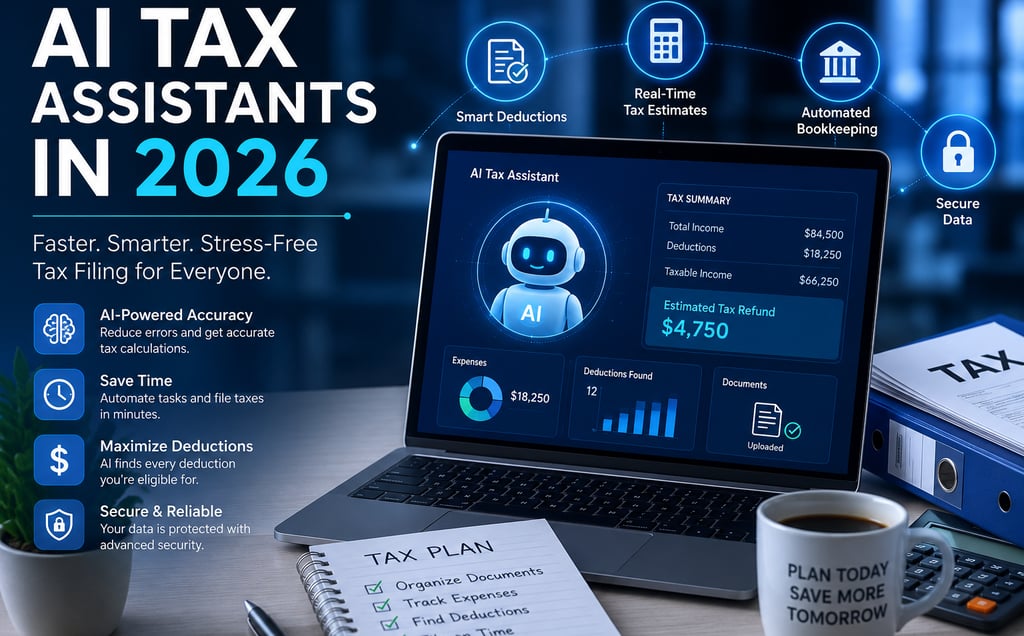
AI tax assistants are software platforms powered by artificial intelligence and machine learning. These tools analyze financial information, organize transactions, classify expenses, and assist users in preparing tax returns more efficiently.
Unlike traditional software that simply follows fixed rules, AI systems learn from financial patterns, automate repetitive tasks, and provide personalized recommendations based on user data.
Many modern AI tax solutions can:
Import bank transactions automatically
Categorize expenses
Estimate tax liabilities
Identify potential deductions
Detect unusual financial activity
Generate financial reports
Assist with tax planning throughout the year
How AI Is Changing Tax Filing
Artificial intelligence is improving nearly every stage of the tax preparation process.
Instead of waiting until tax season, AI continuously monitors financial activity throughout the year. It keeps records organized, updates income summaries, and prepares reports automatically.
Some advanced AI systems can even answer tax-related questions using natural language, making tax preparation easier for people without accounting knowledge.
As governments continue moving toward digital tax systems, AI-powered automation is expected to become even more valuable in the coming years.
Key Features of Modern AI Tax Assistants
Today's AI tax tools include a wide range of intelligent features designed to simplify financial management.
Some of the most valuable capabilities include:
Automatic receipt scanning
Expense categorization
Income tracking
Tax deduction suggestions
Invoice management
Crypto transaction analysis
Real-time tax estimates
Audit risk alerts
Smart financial dashboards
Personalized tax recommendations
These features help users remain organized throughout the year instead of rushing before filing deadlines.
Benefits for Individuals
For individual taxpayers, AI offers several important advantages.
Saves Time
Instead of manually entering hundreds of transactions, AI imports and organizes financial records automatically.
Reduces Errors
Artificial intelligence checks calculations and identifies missing information before tax forms are submitted.
Finds More Deductions
Many taxpayers overlook eligible deductions. AI systems compare financial data against tax rules to highlight opportunities that users might miss.
Better Financial Planning
AI provides year-round tax estimates, helping users avoid unexpected tax bills.
Easier Record Keeping
Digital document storage keeps receipts and invoices organized whenever needed.
Advantages for Small Businesses
Small businesses often spend a significant amount of time managing taxes, invoices, payroll, and expenses. AI tax assistants reduce this workload by automating routine tasks, allowing business owners to focus on growth instead of paperwork.
1. Automated Bookkeeping
AI can automatically record daily transactions, categorize expenses, and reconcile bank accounts. This minimizes manual data entry and improves accuracy.
2. Improved Cash Flow Management
By tracking income and expenses in real time, AI helps businesses understand their financial position and prepare for upcoming tax obligations.
3. Faster Tax Preparation
Rather than collecting documents at the last minute, AI organizes financial records throughout the year, making tax filing much quicker.
4. Better Compliance
Modern AI tools monitor changing tax rules and help businesses stay compliant by reducing the chances of filing mistakes.
5. Valuable Business Insights
AI-generated reports can reveal spending patterns, profit margins, and opportunities to reduce costs, helping owners make smarter financial decisions.
AI vs Traditional Tax Preparation
Feature
AI Tax Assistants
Traditional Tax Preparation
Speed
Very Fast
Time-Consuming
Data Entry
Mostly Automated
Mostly Manual
Error Detection
Intelligent Analysis
Manual Review
Cost
Often Lower
Can Be Expensive
Availability
24/7
Business Hours
Financial Insights
Real-Time
Limited
While traditional accountants remain essential for complex tax situations, AI provides an excellent solution for routine tax preparation and financial management.
Common Challenges and Risks
Although AI tax assistants offer many benefits, users should also understand their limitations.
Data Privacy
Financial information is highly sensitive. Always choose trusted AI platforms with strong security measures and encryption.
Human Review Is Still Important
AI can make mistakes if incorrect or incomplete data is entered. Reviewing tax returns before submission remains essential.
Complex Tax Situations
International taxation, large investments, or complicated business structures may still require advice from a qualified tax professional.
Changing Tax Laws
Tax regulations evolve regularly. Ensure your AI software stays updated with the latest legal requirements.
Best Practices for Using AI Tax Tools
To get the best results, follow these simple practices:
Keep your financial records updated regularly.
Upload receipts as soon as possible.
Connect bank accounts securely.
Review AI-generated recommendations before filing.
Back up important financial documents.
Use strong passwords and enable two-factor authentication.
Consult a tax professional for complex financial situations.
By combining AI automation with careful review, you can achieve both efficiency and accuracy.
The Future of AI in Tax Management
Artificial intelligence is expected to play an even bigger role in tax management over the next few years. Governments around the world are moving toward digital tax systems, and AI will become an essential tool for both taxpayers and tax authorities.
Future AI tax assistants may offer features such as:
Predicting future tax liabilities based on your income.
Providing personalized tax-saving strategies.
Automatically preparing tax returns before filing deadlines.
Integrating with banking, payroll, and investment platforms.
Supporting international tax compliance for remote workers and global businesses.
Using voice assistants to answer tax-related questions instantly.
As AI continues to improve, tax preparation will become faster, more accurate, and less stressful than ever before.
Frequently Asked Questions (FAQs)
Are AI tax assistants accurate?
Yes, reputable AI tax assistants are highly accurate when provided with complete and correct financial information. However, users should always review their tax returns before submission.
Can AI replace a tax accountant?
For simple tax situations, AI can handle many tasks efficiently. However, businesses with complex finances or international tax obligations may still benefit from professional advice.
Are AI tax assistants safe?
Most trusted platforms use encryption and advanced security measures to protect user data. Always choose reputable software and enable two-factor authentication.
Can freelancers use AI tax assistants?
Absolutely. Freelancers, consultants, content creators, and self-employed professionals can use AI tools to track income, categorize expenses, and estimate taxes throughout the year.
Do AI tax assistants support cryptocurrency taxes?
Many modern AI tax platforms can import cryptocurrency transactions, calculate gains and losses, and generate reports for tax filing.
Final Thoughts
AI tax assistants are transforming the way individuals and businesses manage taxes in 2026. By automating repetitive tasks, reducing errors, and providing valuable financial insights, these tools save time and improve confidence during tax season.
While AI is not a complete replacement for professional tax advisors in every situation, it has become an essential companion for managing everyday tax responsibilities. Whether you're a freelancer, investor, crypto trader, or small business owner, adopting AI-powered tax solutions can help you stay organized, compliant, and financially prepared throughout the year.
As technology continues to evolve, AI-driven tax management is likely to become the standard, making tax filing simpler, smarter, and more accessible for everyone.
Key Takeaways
AI automates tax preparation and bookkeeping.
It reduces errors and saves valuable time.
Small businesses benefit from improved compliance and financial insights.
Human review is still important for complex tax situations.
AI tax assistants will become increasingly powerful as digital tax systems evolve.
CryptoFinora
Your trusted source for crypto news, blockchain guides, Bitcoin analysis, and personal finance insight.
COMMUNICATION
muneebrehman2224@gmail.com
© 2026 CryptoFinora. All Rights Reserved - Trusted Crypto & Finance Insights.