How AI Is Transforming Personal Finance in 2026
Discover how AI is changing personal finance in 2026. Learn how smart budgeting, investing, saving, and fraud detection can improve your financial future.
FINANCE
CryptoFinora Team
7/10/20264 min read
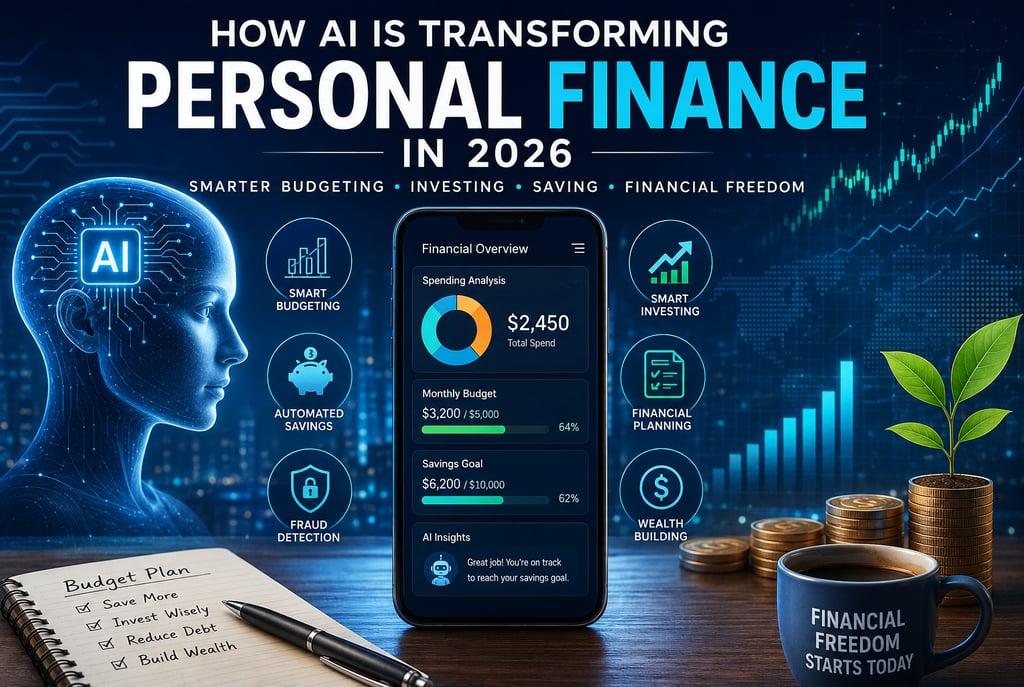
How AI Is Transforming Personal Finance in 2026
Managing money has never been easier than it is in 2026. Artificial Intelligence (AI) is no longer limited to large technology companies—it has become an essential part of everyday personal finance. From budgeting apps that automatically categorize your expenses to AI-powered investment platforms that build personalized portfolios, technology is helping people make smarter financial decisions.
Whether you're trying to save more, invest wisely, or reduce unnecessary spending, AI-powered financial tools can simplify the process while improving accuracy.
Table of Contents
What Is AI in Personal Finance?
AI-Powered Budgeting
Smarter Investing with AI
AI for Saving Money
Fraud Detection and Security
Benefits of AI Financial Tools
Potential Risks
Best Practices
Frequently Asked Questions
Final Thoughts
What Is AI in Personal Finance?
Artificial Intelligence refers to computer systems that analyze data, identify patterns, and make recommendations based on your financial behavior.
Instead of manually tracking expenses or researching investment opportunities, AI tools automatically analyze your financial activity and provide personalized suggestions.
Examples include:
Automatic expense tracking
Personalized savings goals
Investment recommendations
Credit score monitoring
Fraud detection
Bill payment reminders
AI-Powered Budgeting
Modern budgeting apps use AI to organize your transactions automatically.
Instead of entering every purchase manually, AI can:
Categorize spending
Detect unusual expenses
Predict monthly bills
Estimate future cash flow
Suggest spending limits
This makes budgeting far easier and helps users stay on track without constant manual updates.
Smarter Investing with AI
AI has also changed investing.
Many investment platforms now analyze thousands of market signals within seconds.
AI can help investors:
Build diversified portfolios
Reduce emotional investing
Analyze market trends
Rebalance investments automatically
Identify long-term opportunities
Although AI improves decision-making, it should support—not replace—your own research.
AI Helps You Save More Money
Saving money often requires discipline, but AI makes the process more automatic.
Popular AI features include:
Automatic round-up savings
Personalized savings goals
Spending alerts
Subscription tracking
Smart bill reminders
Small automated savings can grow significantly over time, making long-term financial goals easier to achieve.
AI Improves Financial Security
Financial fraud is becoming more sophisticated, but AI is helping banks detect suspicious activity faster than traditional systems.
AI security systems can:
Detect unusual transactions
Block fraudulent payments
Monitor login activity
Identify identity theft attempts
Send real-time security alerts
These features help protect users from financial losses and improve overall account security.
Benefits of Using AI for Personal Finance
AI-powered financial tools offer several advantages that make money management easier and more efficient.
1. Saves Time
AI automatically tracks expenses, categorizes transactions, and creates reports, reducing the need for manual budgeting.
2. Better Financial Decisions
By analyzing your spending habits and financial goals, AI provides personalized recommendations that can help you make smarter choices.
3. Improves Budgeting
Real-time insights help you understand where your money goes, making it easier to control unnecessary expenses.
4. Smarter Investing
AI can analyze market trends quickly and help investors build diversified portfolios based on their risk tolerance.
5. Increased Security
Banks and financial apps use AI to detect suspicious activity, helping prevent fraud before significant damage occurs.
Potential Risks of AI in Personal Finance
While AI offers many benefits, it also has some limitations that users should understand.
Privacy Concerns
AI financial apps often require access to banking information. Always choose trusted platforms with strong security measures.
Over-Reliance on Technology
AI provides recommendations, but it cannot predict every market movement or personal financial situation. Human judgment remains important.
Data Accuracy
AI is only as effective as the data it receives. Incorrect or outdated information can lead to poor recommendations.
Market Uncertainty
Even advanced AI cannot guarantee investment profits because financial markets are influenced by unpredictable events.
Best Practices for Using AI Financial Tools
To get the most value from AI while minimizing risks:
Choose reputable financial apps with strong security features.
Enable two-factor authentication (2FA) on all financial accounts.
Regularly review AI-generated recommendations instead of following them blindly.
Keep your financial information updated.
Diversify investments instead of relying on a single strategy.
Continue learning basic financial principles alongside using AI tools.
Frequently Asked Questions (FAQs)
Is AI safe for managing personal finances?
Yes, if you use trusted financial platforms with encryption, secure authentication, and privacy protections.
Can AI replace a financial advisor?
AI can assist with budgeting and investing, but complex financial planning may still benefit from advice from a qualified professional.
Does AI guarantee better investment returns?
No. AI can improve analysis and decision-making, but it cannot eliminate investment risk or guarantee profits.
Are AI budgeting apps worth using?
For many people, yes. They can automate budgeting, track spending, and help build healthier financial habits.
Who can benefit from AI in personal finance?
Students, professionals, families, freelancers, and retirees can all use AI tools to better manage their money.
Conclusion
Artificial Intelligence is reshaping personal finance in 2026 by making budgeting, saving, investing, and financial security more accessible than ever. AI-powered tools can help users understand their spending habits, automate savings, detect fraud, and make informed investment decisions. While AI offers convenience and valuable insights, it should complement—not replace—sound financial knowledge and careful decision-making.
As AI technology continues to evolve, individuals who embrace these smart financial tools responsibly will be better positioned to achieve long-term financial stability and reach their financial goals.
Key Takeaways
AI simplifies budgeting by automatically tracking expenses.
Smart investing platforms use AI to analyze market trends.
Automated savings features help build wealth consistently.
AI improves banking security through fraud detection.
Human judgment remains essential when making financial decisions.
Final Thoughts
The future of personal finance is becoming more intelligent, personalized, and efficient. Whether you're just starting your financial journey or looking to optimize your existing strategy, AI can be a valuable partner in helping you manage your money wisely. By combining modern technology with responsible financial habits, you can build a stronger financial future in 2026 and beyond.
Frequently Asked Keywords
AI in Personal Finance 2026
Artificial Intelligence Finance
AI Budgeting Apps
Smart Money Management
AI Investing
Financial Technology Trends
Personal Finance Tips 2026
AI Saving Tools
Digital Banking
FinTech Innovation
SEO Tags
AI Personal Finance, AI Budgeting, Smart Investing, Financial Technology, FinTech, Money Management, Saving Money, Budgeting Tips, AI Investing, Personal Finance 2026
CryptoFinora
Your trusted source for crypto news, blockchain guides, Bitcoin analysis, and personal finance insight.
COMMUNICATION
muneebrehman2224@gmail.com
© 2026 CryptoFinora. All Rights Reserved - Trusted Crypto & Finance Insights.