Quantum Computing vs Bitcoin: Is Cryptocurrency Really at Risk in 2026?
Could quantum computers break Bitcoin? Learn how quantum computing could affect cryptocurrency, the real risks, and how Bitcoin may adapt to stay secure in 2026.
CRYPTO
CryptoFinora Team
7/13/20265 min read
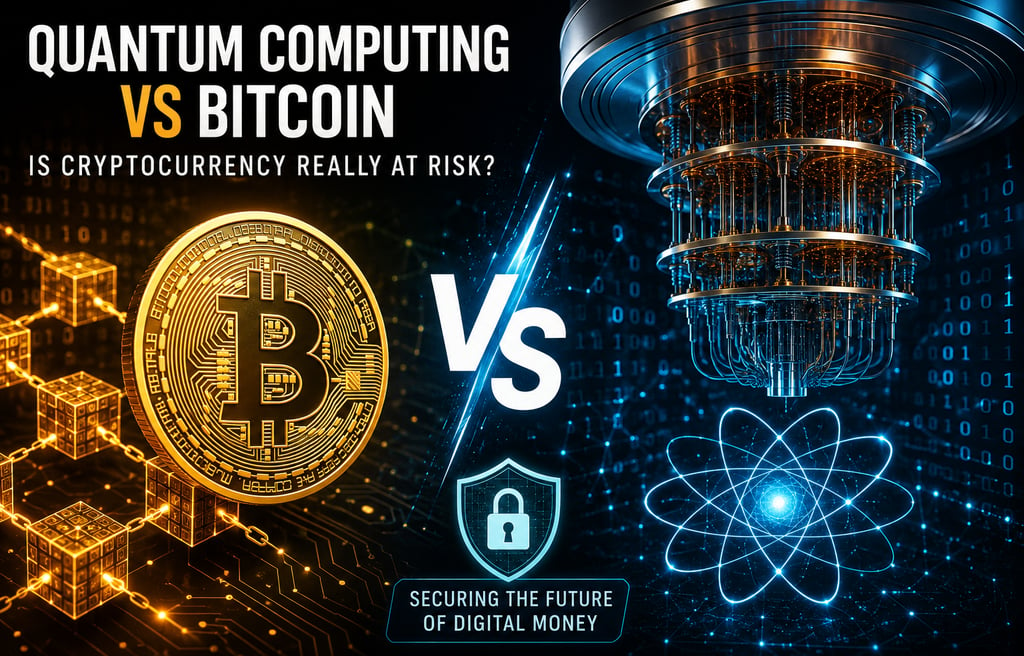
Quantum Computing vs Bitcoin: Is Cryptocurrency Really at Risk in 2026?
Bitcoin has become one of the world's most secure digital assets, protected by advanced cryptography and a decentralized blockchain network. However, as quantum computing continues to evolve, many investors are asking an important question: Could quantum computers one day break Bitcoin's security?
The idea may sound like science fiction, but researchers and technology companies are making rapid progress in quantum computing. Unlike traditional computers, quantum computers process information in entirely different ways, allowing them to solve certain mathematical problems much faster than today's machines.
This has sparked debate across the cryptocurrency industry. Some experts believe quantum computing could eventually threaten the encryption methods that protect Bitcoin wallets and digital signatures. Others argue that the technology is still years away from becoming powerful enough to pose a real danger.
Understanding the facts is essential because misinformation often creates unnecessary fear in financial markets. While quantum computing has impressive capabilities, the reality is more complex than many headlines suggest.
What Is Quantum Computing?
A traditional computer stores information using bits, which can only be either 0 or 1.
A quantum computer uses qubits, which can exist in multiple states at the same time through a principle known as superposition. This allows quantum computers to perform certain calculations far more efficiently than conventional computers.
Quantum computing is expected to revolutionize industries such as:
Drug discovery
Artificial intelligence
Climate modeling
Financial simulations
Scientific research
Cybersecurity
Although the technology is advancing rapidly, today's quantum computers remain limited, expensive, and prone to errors.
Why Is Bitcoin Being Linked to Quantum Computing?
Bitcoin relies on cryptographic algorithms to keep transactions secure.
Two major security systems protect the Bitcoin network:
SHA-256 hashing, which secures the blockchain and mining process.
ECDSA (Elliptic Curve Digital Signature Algorithm), which verifies wallet ownership and authorizes transactions.
Researchers believe that a sufficiently powerful quantum computer could potentially weaken ECDSA by solving mathematical problems much faster than classical computers.
However, this does not mean Bitcoin can currently be hacked. Existing quantum computers are nowhere near the scale required to break Bitcoin's cryptography in real-world conditions.
Can Quantum Computers Really Crack Bitcoin?
The short answer is not today.
While quantum computing has made significant progress, today's most advanced quantum machines are still far from being able to break Bitcoin's encryption. Researchers estimate that cracking Bitcoin's ECDSA signatures would require a fault-tolerant quantum computer with millions of stable physical qubits operating with extremely low error rates. Current systems are nowhere near that level.
In other words, the risk is considered a future concern rather than an immediate threat.
How Could Bitcoin Be Affected?
If quantum computers eventually become powerful enough, they could create several security challenges for cryptocurrencies.
1. Wallet Security
Bitcoin wallets use private keys to prove ownership. If a quantum computer could derive a private key from a public key, an attacker might be able to steal funds from vulnerable wallets.
Fortunately, many Bitcoin addresses do not reveal their public keys until a transaction is made, reducing the immediate attack surface.
2. Digital Signatures
Every Bitcoin transaction is authorized using a digital signature. A sufficiently advanced quantum computer could, in theory, forge these signatures if current cryptographic algorithms were never upgraded.
3. Investor Confidence
Even before a real attack becomes possible, news about major quantum breakthroughs could create fear in the market. This uncertainty might lead to short-term price volatility as investors react to headlines.
What Are Bitcoin Developers Doing?
The Bitcoin community is not ignoring this possibility.
Researchers and developers are actively studying post-quantum cryptography—new cryptographic techniques designed to remain secure even against quantum computers. If quantum technology advances to the point where it poses a genuine risk, Bitcoin's software can be updated through community consensus.
Possible solutions include:
Replacing vulnerable digital signature algorithms with quantum-resistant alternatives.
Encouraging users to move funds to upgraded wallet addresses.
Gradually introducing post-quantum security standards without disrupting the network.
Testing new cryptographic methods long before they are needed.
Because Bitcoin is open-source, developers worldwide continuously review and improve its security.
What Do Experts Think?
Most cybersecurity researchers agree on three key points:
Quantum computing is advancing rapidly, but it has not yet reached the level required to threaten Bitcoin.
Governments, universities, and technology companies are already developing quantum-resistant encryption standards.
The crypto industry has time to prepare, provided development continues and upgrades are adopted before quantum computers become powerful enough.
The consensus is that quantum computing should be monitored closely, but it is not a reason to panic or abandon Bitcoin today.
How Likely Is the Quantum Threat by 2030?
Predicting the exact timeline for practical quantum computers is difficult. Some experts believe major breakthroughs could happen within the next decade, while others argue that large-scale, fault-tolerant quantum computers are still many years away.
For now, there is no evidence that any existing quantum computer can break Bitcoin's cryptographic security. The biggest challenge is not simply increasing the number of qubits but making them stable, reliable, and capable of performing long, error-free computations.
This means Bitcoin's developers and the broader cybersecurity community still have time to prepare for future advancements.
What Should Crypto Investors Do?
Instead of worrying about unlikely short-term scenarios, investors should focus on proven security practices.
Use Reputable Wallets
Choose trusted hardware or software wallets that receive regular security updates. Wallet providers are likely to adopt quantum-resistant technologies if they become necessary.
Keep Your Software Updated
Always install the latest updates for your wallet applications and cryptocurrency platforms. Security improvements often protect users against newly discovered threats.
Follow Trusted News Sources
Avoid reacting to sensational headlines. Quantum computing is a rapidly evolving field, and many online claims exaggerate its current capabilities. Rely on information from respected cybersecurity researchers and official Bitcoin development channels.
Diversify Your Investments
Diversification remains one of the best risk-management strategies. Holding a balanced portfolio across different asset classes can reduce the impact of unexpected technological or market changes.
The Future of Bitcoin in a Quantum Era
Bitcoin has faced many challenges since its launch, including exchange hacks, regulatory changes, market crashes, and technological debates. Despite these obstacles, the network has continued to evolve.
If quantum computing eventually becomes a practical threat, Bitcoin is not expected to remain unchanged. Like other major technologies, it can be upgraded through community consensus and software improvements. Researchers are already exploring quantum-resistant cryptography to help ensure the network remains secure for the long term.
Final Verdict
Quantum computing is an exciting technological breakthrough, but it does not currently pose an immediate danger to Bitcoin.
Today's quantum computers are far from powerful enough to crack Bitcoin's encryption. While researchers continue to study future risks, developers are also preparing solutions that could protect the network if quantum technology reaches that stage.
For investors, the best approach is to stay informed, use secure wallets, follow trusted sources, and focus on long-term investment strategies rather than fear-driven speculation.
As technology evolves, Bitcoin is likely to evolve with it—just as it has throughout its history.
Frequently Asked Questions (FAQs)
1. Can quantum computers hack Bitcoin today?
No. Current quantum computers are not powerful enough to break Bitcoin's cryptographic security.
2. Is Bitcoin preparing for quantum computing?
Yes. Researchers and developers are actively exploring post-quantum cryptography and potential upgrades.
3. Should investors be worried right now?
Most experts believe there is no immediate threat, but staying informed about future technological developments is wise.
4. Will all cryptocurrencies face the same risk?
Many cryptocurrencies use similar cryptographic techniques, so any future quantum threat could affect multiple blockchain networks unless they adopt quantum-resistant security.
5. What is the safest strategy for crypto investors?
Use reputable wallets, enable strong security practices, diversify your investments, and avoid making decisions based on sensational news.
Conclusion
Quantum computing has the potential to transform many industries, including cybersecurity and finance. Although it may eventually require changes to the way cryptocurrencies protect digital assets, Bitcoin is not at immediate risk. Ongoing research, continuous software development, and proactive security planning give the cryptocurrency ecosystem a strong foundation for adapting to future technological advances.
CryptoFinora
Your trusted source for crypto news, blockchain guides, Bitcoin analysis, and personal finance insight.
COMMUNICATION
muneebrehman2224@gmail.com
© 2026 CryptoFinora. All Rights Reserved - Trusted Crypto & Finance Insights.