Real Estate Tokenization in 2026: The Future of Property Investing
Learn how real estate tokenization works, its benefits, risks, and why blockchain is transforming property investing in 2026.
INVESTING
CryptoFinora Team
7/9/20262 min read
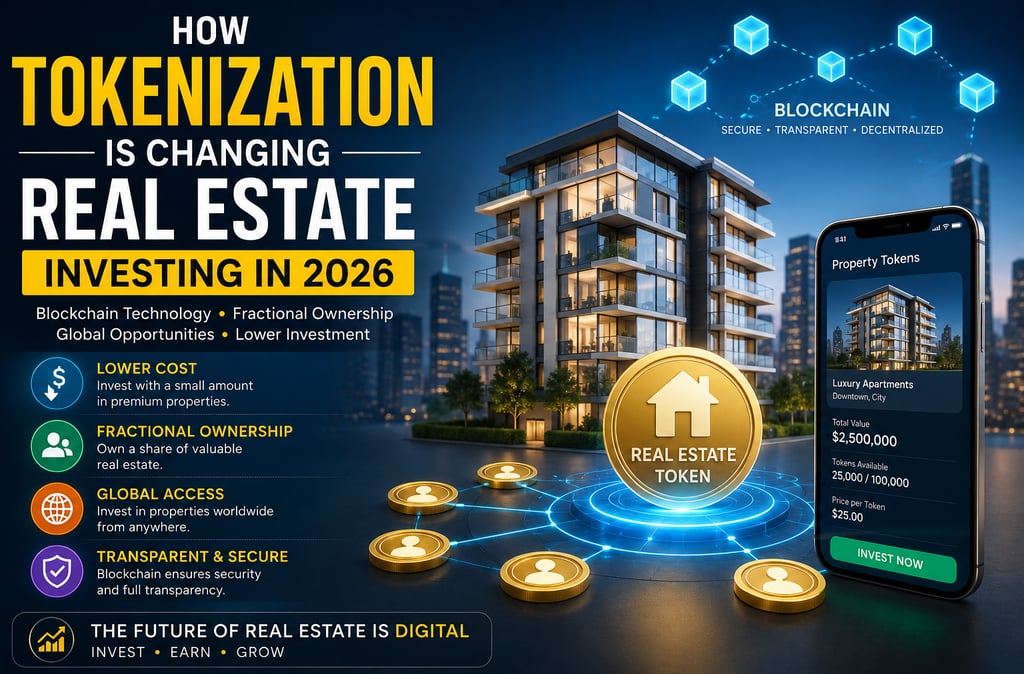
Real estate has always been one of the most popular investment options, but buying property often requires a large amount of money. In 2026, blockchain technology is changing that through real estate tokenization.
Tokenization allows investors to own a small share of a property instead of purchasing an entire building or apartment. This innovation is making property investment more affordable, accessible, and transparent for people around the world.
What Is Real Estate Tokenization?
Real estate tokenization is the process of converting ownership of a property into digital tokens using blockchain technology.
Each token represents a fraction of the property's value. Investors can buy, sell, or hold these tokens just like other digital assets, making real estate investing more flexible than traditional methods.
How Does Tokenization Work?
The process usually follows these steps:
1. A property is evaluated and legally prepared for tokenization.
2. Ownership is divided into thousands of digital tokens.
3. The tokens are recorded on a blockchain.
4. Investors purchase tokens through an approved platform.
5. Rental income or profits are distributed according to each investor's ownership.
This system reduces paperwork and improves transparency while allowing fractional ownership.
Benefits of Real Estate Tokenization
1. Lower Investment Requirement
Instead of needing thousands of dollars, investors can start with a much smaller amount.
2. Fractional Ownership
Multiple investors can own shares in the same property without managing the building themselves.
3. Better Liquidity
Traditional real estate can take months to sell. Tokenized assets may be traded more easily on approved digital marketplaces.
4. Global Investment Opportunities
Investors can access international real estate markets without relocating or purchasing an entire property.
5. Increased Transparency
Blockchain records every transaction, making ownership history secure and verifiable.
Risks Investors Should Know
Like every investment, tokenized real estate also has risks.
These include:
Regulatory changes
Market volatility
Platform security risks
Property value fluctuations
Limited availability in some countries
Investors should research both the property and the platform before investing.
Who Should Consider Tokenized Real Estate?
This investment may be suitable for:
Beginner investors
Long-term wealth builders
Crypto investors seeking diversification
Individuals with limited investment capital
People interested in blockchain technology
Diversifying investments can help reduce overall risk.
The Future of Tokenized Property
Experts believe tokenization could become one of the biggest innovations in real estate over the next decade.
Future developments may include:
24/7 digital property trading
Faster international investments
Smart contract-based rental payments
Lower transaction costs
Greater market accessibility
As regulations become clearer, adoption is expected to increase worldwide.
Final Thoughts
Real estate tokenization combines the stability of property investment with the efficiency of blockchain technology. While it does not eliminate investment risk, it opens new opportunities for investors who previously could not afford traditional real estate.
Understanding how tokenized property works can help investors prepare for the future of digital finance and modern investing.
Frequently Asked Questions
Is tokenized real estate safe?
It depends on the platform, legal structure, and local regulations. Always perform thorough research before investing.
Can beginners invest in tokenized real estate?
Yes. Many platforms allow investors to start with relatively small amounts.
Is tokenized real estate a cryptocurrency?
No. It represents ownership in a real-world property, although blockchain technology is used to manage the tokens.
Is tokenized real estate the future?
Many experts believe it has strong long-term potential due to increased accessibility, transparency, and efficiency.
CryptoFinora
Your trusted source for crypto news, blockchain guides, Bitcoin analysis, and personal finance insight.
COMMUNICATION
muneebrehman2224@gmail.com
© 2026 CryptoFinora. All Rights Reserved - Trusted Crypto & Finance Insights.