Stablecoins Explained: The Complete Beginner's Guide to Safe Crypto Payments in 2026
Learn what stablecoins are, how USDT, USDC, and DAI work, their benefits, risks, and how beginners can safely use them in 2026.
CRYPTO
CryptoFinora Team
7/8/20264 min read
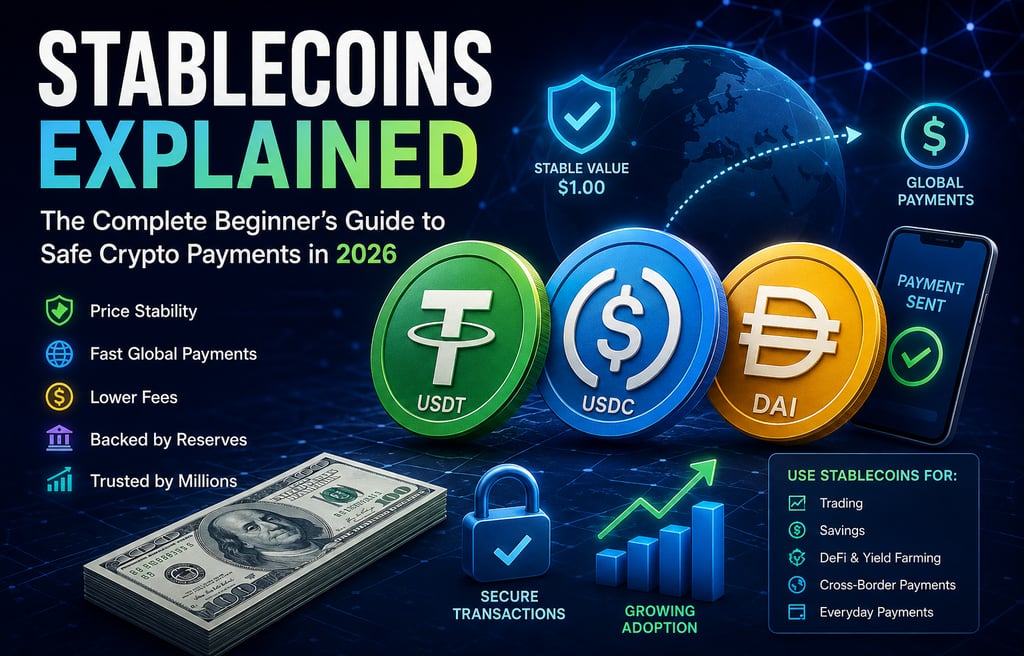

What Are Stablecoins?
One of the biggest problems with cryptocurrencies is price volatility. Bitcoin and many altcoins can gain or lose significant value within hours. This makes them difficult to use for everyday payments.
Stablecoins were created to solve this problem.
A stablecoin is a cryptocurrency designed to maintain a stable value by being linked to another asset, most commonly the US dollar. For example, one USDT or one USDC is generally intended to stay close to $1.
Because of this stability, millions of crypto users rely on stablecoins for trading, saving, sending money internationally, and protecting themselves from sudden market swings.
Why Stablecoins Matter in 2026
As crypto adoption continues to grow, stablecoins have become an essential part of the digital economy.
People use them to:
Protect profits during market crashes
Send money across borders quickly
Avoid traditional banking delays
Earn passive income through DeFi
Trade cryptocurrencies without converting back to cash
Businesses are also beginning to accept stablecoin payments because transactions are often faster and less expensive than traditional payment methods.
Types of Stablecoins
There are several kinds of stablecoins, each using a different method to maintain its value.
1. Fiat-Backed Stablecoins
These are backed by traditional currencies such as the US dollar.
Examples include:
USDT
USDC
Every token is intended to be supported by reserve assets.
2. Crypto-Backed Stablecoins
These are backed by cryptocurrencies rather than fiat money.
The most well-known example is DAI, which uses smart contracts and over-collateralization to help maintain its peg.
3. Commodity-Backed Stablecoins
Some stablecoins are linked to physical assets like gold.
These allow investors to gain digital exposure to commodities.
4. Algorithmic Stablecoins
These rely on algorithms instead of reserves to maintain their value.
While innovative, they can carry higher risk if the mechanism fails.
Top Stablecoins Compared
Not all stablecoins work in the same way. Some are managed by private companies, while others are decentralized and controlled by smart contracts. Understanding the differences can help you choose the right one for your needs.
Stablecoin
Pegged To
Best For
Key Advantage
USDT (Tether)
US Dollar
Crypto trading
Highest liquidity
USDC
US Dollar
Long-term holding & payments
Strong transparency
DAI
US Dollar
DeFi users
Decentralized system
FDUSD
US Dollar
Exchange trading
Growing adoption
PYUSD
US Dollar
Digital payments
Backed by PayPal ecosystem
Benefits of Stablecoins
1. Price Stability
Unlike Bitcoin and many altcoins, stablecoins are designed to maintain a steady value. This makes them suitable for everyday transactions and protecting funds during market volatility.
2. Fast Global Transfers
Traditional international bank transfers can take several days and involve high fees. Stablecoins allow users to send money worldwide within minutes.
3. Lower Transaction Costs
Many blockchain networks offer significantly lower fees than conventional banking systems, especially for cross-border payments.
4. Easy Access to DeFi
Stablecoins are widely used in decentralized finance (DeFi), where users can lend, borrow, or earn yield without relying on traditional banks.
5. Better Portfolio Protection
During crypto market downturns, investors often convert volatile assets into stablecoins to preserve value without leaving the crypto ecosystem.
Risks of Stablecoins
Although stablecoins are generally less volatile than other cryptocurrencies, they still come with important risks.
Reserve Risk
Some stablecoins depend on reserve assets held by companies. If reserves are insufficient or poorly managed, confidence in the stablecoin may decline.
Regulatory Changes
Governments around the world are introducing new regulations for stablecoins. Future rules could affect how they are issued and used.
Smart Contract Risk
Decentralized stablecoins rely on smart contracts. Bugs or vulnerabilities in the code can create security risks.
De-Pegging
In rare situations, a stablecoin may temporarily lose its intended value (known as "de-pegging"), causing its price to move away from $1.
How to Buy Stablecoins Safely
If you're new to cryptocurrency, follow these steps:
Choose a trusted cryptocurrency exchange.
Complete identity verification if required.
Deposit funds using your preferred payment method.
Search for the stablecoin you want (such as USDT or USDC).
Purchase the stablecoin.
Transfer it to a secure crypto wallet if you plan to hold it long-term.
Always enable two-factor authentication (2FA) and never share your wallet's recovery phrase with anyone.
Best Ways to Use Stablecoins
Stablecoins are useful for much more than trading.
You can use them to:
Send money internationally
Store digital savings
Pay freelancers or remote workers
Trade cryptocurrencies
Participate in DeFi platforms
Receive online payments
Reduce exposure to market volatility
Frequently Asked Questions (FAQ)
What is the safest stablecoin?
Many investors consider USDC one of the most transparent stablecoins due to its reserve reporting. However, every stablecoin carries some level of risk.
Can stablecoins lose value?
Yes. Although they are designed to remain stable, they can occasionally trade above or below their target value.
Are stablecoins good for beginners?
Yes. Because of their relatively stable price, they are often one of the easiest ways for beginners to enter the cryptocurrency market.
Can I earn interest on stablecoins?
Some exchanges and decentralized finance platforms offer yield opportunities, but returns vary and always involve risk.
Final Thoughts
Stablecoins have become one of the most important innovations in the cryptocurrency industry. They combine many of the advantages of blockchain technology with greater price stability, making them useful for payments, trading, savings, and decentralized finance.
Whether you're a beginner learning about digital assets or an experienced investor looking for a safer way to manage funds during market volatility, understanding how stablecoins work is an essential step toward making informed financial decisions.
As the crypto industry continues to evolve in 2026 and beyond, stablecoins are expected to play an even bigger role in global finance. Choosing reputable stablecoins, using secure wallets, and staying informed about regulatory developments can help you use them more safely and effectively.
Primary Keyword: Stablecoins Explained
Related Keywords:
What are stablecoins
Stablecoins guide 2026
USDT vs USDC
Best stablecoins
Stablecoin investing
Crypto payments
Digital dollar
Cryptocurrency for beginners
Stablecoin risks
How to buy stablecoins
CryptoFinora
Your trusted source for crypto news, blockchain guides, Bitcoin analysis, and personal finance insight.
COMMUNICATION
muneebrehman2224@gmail.com
© 2026 CryptoFinora. All Rights Reserved - Trusted Crypto & Finance Insights.