Tokenized Real Estate Explained: How Blockchain Is Changing Property Investment in 2026
Learn how tokenized real estate works, its benefits, risks, and why blockchain technology is transforming property investment in 2026.
INVESTING
CryptoFinora Team
7/16/20266 min read
Introduction
Real estate has long been considered one of the most reliable ways to build wealth. However, traditional property investing often requires large amounts of money, extensive paperwork, and significant time to buy or sell assets. These barriers have prevented many people from entering the property market.
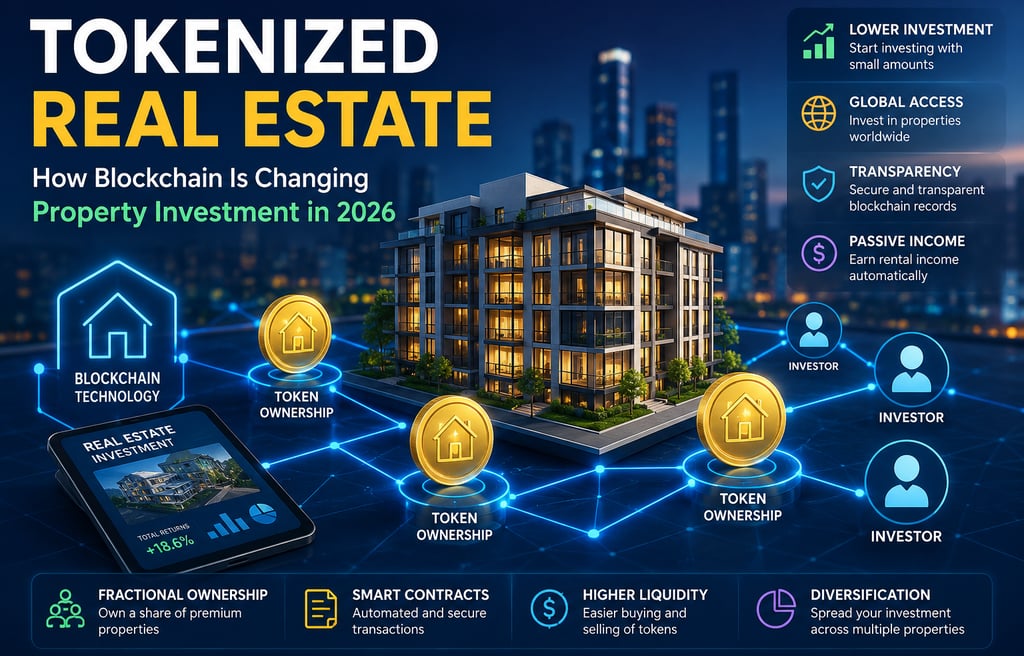
In 2026, tokenized real estate is changing this landscape by combining blockchain technology with property ownership. Instead of purchasing an entire building or apartment, investors can now buy digital tokens that represent fractional ownership of real estate. This innovation makes property investment more accessible, transparent, and efficient.
Whether you're a beginner investor or someone looking to diversify your portfolio, understanding tokenized real estate can help you explore one of the fastest-growing trends in digital finance.
What Is Tokenized Real Estate?
Tokenized real estate is the process of converting ownership rights of a physical property into digital tokens stored on a blockchain.
Each token represents a small percentage of the property's value. Investors purchase these tokens instead of buying the entire property.
For example:
A commercial building worth $2 million can be divided into 2 million digital tokens.
Each token represents $1 worth of ownership.
Investors can purchase as many tokens as they want based on their budget.
This fractional ownership model opens the real estate market to people who previously couldn't afford expensive properties.
How Does Real Estate Tokenization Work?
The process generally involves several steps:
1. Property Selection
A residential apartment, office building, hotel, shopping mall, or warehouse is selected for tokenization.
2. Legal Structure
Ownership rights are organized under a legal entity to ensure compliance with local regulations.
3. Property Valuation
Professional appraisers determine the market value of the property.
4. Token Creation
Blockchain technology creates digital tokens representing ownership shares.
5. Investor Participation
Investors buy tokens through approved digital investment platforms.
6. Income Distribution
Rental income and profits are distributed proportionally to token holders.
Why Is Tokenized Real Estate Becoming Popular?
Several factors have contributed to its rapid growth.
Lower Investment Requirements
Traditional property investing may require tens or hundreds of thousands of dollars.
Tokenization allows people to invest with much smaller amounts, making real estate more accessible.
Fractional Ownership
Instead of buying one expensive property, investors can spread their money across multiple real estate projects.
This improves diversification while reducing investment risk.
Increased Liquidity
Selling a physical property often takes weeks or months.
Digital property tokens can potentially be traded much faster through regulated marketplaces.
Global Investment Opportunities
Blockchain removes many geographical barriers.
Investors can participate in international real estate projects without physically visiting the property.
Transparent Ownership
Every transaction is permanently recorded on the blockchain.
This creates greater transparency and reduces the chances of ownership disputes or fraud.
Key Benefits of Tokenized Real Estate
Easier Portfolio Diversification
Instead of investing all your money into one apartment, you can own small portions of multiple properties across different cities and countries.
Passive Rental Income
Many tokenized properties distribute rental profits to token holders.
This allows investors to generate recurring passive income without directly managing tenants.
Lower Transaction Costs
Blockchain technology reduces paperwork, intermediaries, and administrative expenses.
Faster Transactions
Traditional property purchases often involve weeks of legal processing.
Blockchain transactions can significantly speed up ownership transfers.
Better Accessibility
Young investors and beginners can start building a real estate portfolio with relatively small investments.
Types of Properties That Can Be Tokenized
Almost any type of property can be tokenized, including:
Residential apartments
Luxury villas
Commercial office buildings
Shopping centers
Hotels
Student housing
Warehouses
Industrial facilities
Vacation rentals
Mixed-use developments
Each property offers different risk levels and potential returns depending on market conditions.
Why Investors Are Paying Attention in 2026
As blockchain technology matures and financial regulations become clearer in many regions, tokenized real estate is attracting both retail and institutional investors. It combines the stability often associated with property investing with the flexibility of digital assets, making it one of the most closely watched innovations in modern finance.
Understanding the Blockchain Behind Tokenized Real Estate
Blockchain is the foundation of tokenized real estate. It acts as a secure digital ledger where every ownership transfer, investment, and transaction is permanently recorded. Unlike traditional databases, blockchain records cannot be easily altered, making the system more transparent and trustworthy.
When an investor purchases property tokens, the blockchain instantly updates ownership records. This eliminates much of the paperwork associated with traditional real estate transactions.
Smart Contracts
A major advantage of blockchain is the use of smart contracts. These are self-executing digital agreements that automatically perform actions when specific conditions are met.
For example, smart contracts can:
Distribute rental income to investors.
Transfer ownership after payment.
Record every transaction automatically.
Reduce the need for intermediaries.
Improve transaction speed and accuracy.
This automation helps lower administrative costs and minimizes human error.
How Do Investors Make Money?
Tokenized real estate offers several ways to generate returns.
1. Rental Income
If the property earns monthly rental income, token holders receive a share based on the percentage of tokens they own.
This creates a source of passive income without the responsibilities of being a traditional landlord.
2. Property Value Appreciation
As the property's market value increases over time, the value of each token may also rise.
Investors can potentially profit by selling their tokens at a higher price than they originally paid.
3. Portfolio Diversification
Instead of investing in a single building, investors can spread their funds across multiple residential and commercial properties.
Diversification helps reduce the impact of poor performance from any one investment.
Risks of Tokenized Real Estate
Although tokenized real estate offers many benefits, it is not without risks.
Regulatory Uncertainty
Laws surrounding digital assets and tokenized investments continue to evolve in many countries. Regulations may vary significantly between jurisdictions.
Market Risk
Property values can decrease due to economic conditions, rising interest rates, or changes in local demand.
Token values may also fluctuate accordingly.
Platform Risk
Many tokenized properties are managed through specialized platforms. Investors should research the platform's reputation, security practices, and regulatory compliance before investing.
Liquidity Risk
While tokenized assets are generally more liquid than traditional property, there may not always be enough buyers when an investor wants to sell.
Liquidity depends on market demand and the availability of regulated marketplaces.
Cybersecurity
Although blockchain itself is highly secure, investors must protect their digital wallets, private keys, and accounts from hacking attempts and phishing scams.
Using strong passwords, two-factor authentication (2FA), and hardware wallets can improve security.
Tokenized Real Estate vs. Traditional Real Estate
Feature
Traditional Real Estate
Tokenized Real Estate
Minimum Investment
High
Low
Ownership
Full Property
Fractional Ownership
Liquidity
Low
Higher
Transaction Speed
Days or Weeks
Potentially Minutes or Hours
Paperwork
Extensive
Significantly Reduced
Accessibility
Limited
Global Access
Transparency
Moderate
High (Blockchain Records)
Real-World Applications
Tokenization is already being explored across a range of property sectors, including:
Residential apartment complexes
Commercial office buildings
Luxury hotels
Holiday rentals
Student housing
Industrial warehouses
Mixed-use developments
Institutional investors are also evaluating tokenization as a way to improve capital efficiency and expand investment opportunities.
Tips Before Investing
Before buying tokenized real estate, consider the following:
Research the platform thoroughly.
Understand the legal structure behind the investment.
Review property valuation reports.
Check expected rental yields and fees.
Diversify across multiple properties instead of investing everything in one asset.
Only invest money that aligns with your financial goals and risk tolerance.
Stay informed about regulations in your country.
The Future of Tokenized Property Investment
As blockchain adoption continues to grow, tokenized real estate could become a mainstream investment option. Improvements in regulation, security, and digital infrastructure may make it easier for investors worldwide to access property markets with lower barriers to entry.
The combination of fractional ownership, transparency, and automation has the potential to reshape how people invest in real estate over the coming years.
Frequently Asked Questions (FAQs)
1. What is tokenized real estate?
Tokenized real estate is a method of dividing ownership of a property into digital tokens on a blockchain. Investors can buy these tokens to own a fractional share of the property instead of purchasing the entire asset.
2. Is tokenized real estate safe?
It can be safe when offered through reputable, regulated platforms with strong security practices. However, like any investment, it carries risks such as market fluctuations, regulatory changes, and platform-related issues.
3. Can beginners invest in tokenized real estate?
Yes. One of the biggest advantages is that beginners can start with relatively small investments, making real estate more accessible than traditional property ownership.
4. How do investors earn returns?
Investors may earn returns through:
Rental income distributions
Appreciation in property value
Selling tokens if their market value increases
Returns are never guaranteed and depend on the performance of the underlying property and market conditions.
5. Is tokenized real estate legal?
Legality depends on the country and the platform being used. Many jurisdictions are introducing regulations for digital assets and security tokens, so investors should always review local laws before investing.
6. Can I sell my property tokens anytime?
This depends on the platform and market liquidity. Some platforms provide secondary marketplaces where tokens can be traded, while others may have holding periods or limited trading options.
Key Takeaways
✔ Makes real estate investing accessible through fractional ownership.
✔ Uses blockchain technology to improve transparency and security.
✔ Enables investors to diversify with smaller amounts of capital.
✔ May provide passive income through rental distributions.
✔ Offers greater liquidity than traditional real estate in some cases.
✔ Investors should still evaluate risks, regulations, and platform credibility before investing.
Final Conclusion
Tokenized real estate is one of the most exciting innovations at the intersection of blockchain and finance. By converting property ownership into digital tokens, it lowers entry barriers, increases transparency, and opens global investment opportunities for both beginners and experienced investors.
While the technology has significant potential, it is still an evolving market. Investors should conduct careful research, understand the legal framework, and diversify their investments rather than relying on a single project.
As blockchain adoption continues to expand in 2026 and beyond, tokenized real estate could reshape the future of property investing, making it more efficient, accessible, and inclusive for people around the world.
CryptoFinora
Your trusted source for crypto news, blockchain guides, Bitcoin analysis, and personal finance insight.
COMMUNICATION
muneebrehman2224@gmail.com
© 2026 CryptoFinora. All Rights Reserved - Trusted Crypto & Finance Insights.